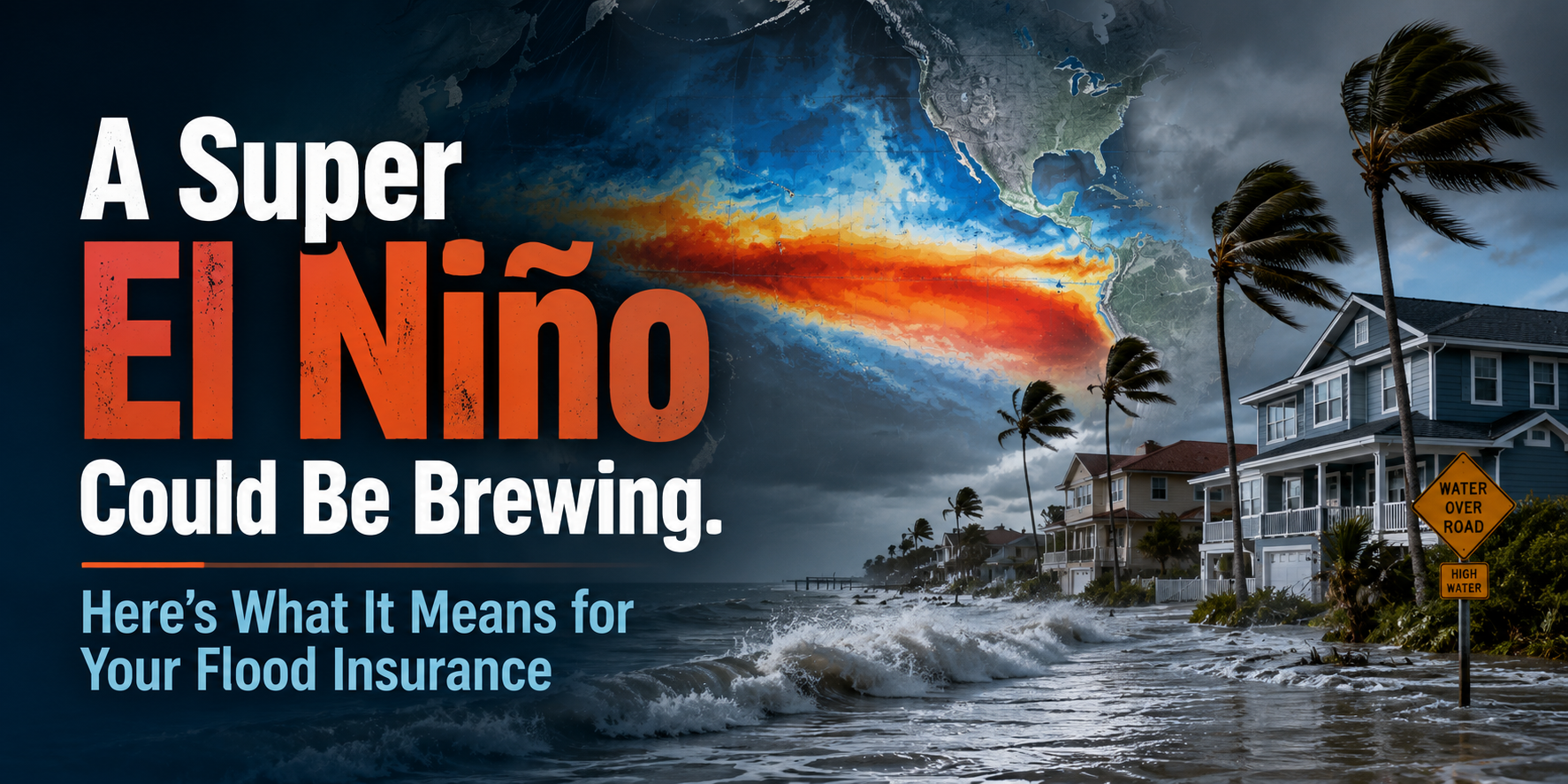
A Super El Niño Could Be Brewing. Here’s What It Means for Your Flood Insurance
El Niño is back in the conversation — and this time, some forecasts are raising the possibility of a particularly strong event.
For homeowners, lenders, and insurance agents, that does not mean panic. But it does mean preparation. A strong El Niño can shift rainfall patterns, increase storm activity in certain regions, and expose gaps in how people think about flood risk.
First, what is El Niño?
El Niño is part of a recurring climate pattern tied to warmer-than-average ocean temperatures in the central and eastern tropical Pacific. When that pattern develops, it can influence weather across the globe — including where storms track, where rainfall concentrates, and where drought or flooding becomes more likely.
The important point for insurance conversations is simple: El Niño does not create the same outcome everywhere. Some areas may see wetter conditions, while others may experience drier or warmer-than-normal weather.
Flood Insurance Takeaway
El Niño is not a flood forecast for a specific property. It is a climate signal that can increase the odds of certain weather patterns — and those patterns can make flood coverage more important.
Why flood insurance should be part of the conversation
Many homeowners still think of flood insurance as something only required inside a FEMA high-risk flood zone. That is one of the biggest misunderstandings in the market.
Flooding can happen outside mapped high-risk areas, especially when heavy rain overwhelms drainage systems, creeks rise quickly, slopes shed water into neighborhoods, or stormwater backs up into streets and homes.
During wetter climate patterns, those “not in a flood zone” conversations can become especially important.
What a strong El Niño can mean for homeowners
Depending on the region, a strong El Niño pattern can be associated with:
- Heavier seasonal rainfall
- Increased runoff and drainage issues
- More frequent surface-water flooding
- Storm impacts in areas that may not regularly see them
- Greater attention from lenders, agents, and property owners
That does not mean every property will flood. But it does mean this is a smart time to review coverage before the next storm is on the radar.
Why waiting can be risky
Flood insurance is easiest to discuss before weather becomes urgent. Once storms are forming, clients may run into waiting periods, underwriting restrictions, binding limitations, or carrier appetite changes.
For agents, this creates a clear opportunity: reach out early, educate clients, and help them understand their options before they are making rushed decisions.
Agent Opportunity
A strong El Niño headline is a natural reason to check in with clients who declined flood coverage, recently purchased a home, are outside the mandatory purchase zone, or have not reviewed their flood limits in several years.
Private flood insurance may offer more flexibility
For many homeowners, private flood insurance can offer an alternative to a one-size-fits-all approach. Depending on the property and location, private markets may provide competitive pricing, broader limit options, and coverage structures that better match the client’s needs.
That flexibility can matter when clients are trying to decide whether flood coverage is worth carrying even when a lender does not require it.
The bottom line
A potential Super El Niño does not guarantee flooding at any one property. But it is a timely reminder that flood risk is broader than the FEMA map, broader than the lender requirement, and often broader than what homeowners assume.
The best time to review flood coverage is before the rain starts.
Help Your Clients Prepare Before the Storm
Flow Flood gives agents access to modern private flood solutions, responsive underwriting, and competitive options for today’s changing flood environment.
Request Access